

Flip the Script: Observations from the Field
Imagine life without courage.
We are trapped in algorithmic reason.
We forgot how to live and love.
It is time to flip the script.
Debut Non-Fiction by:
charles o. macmillan
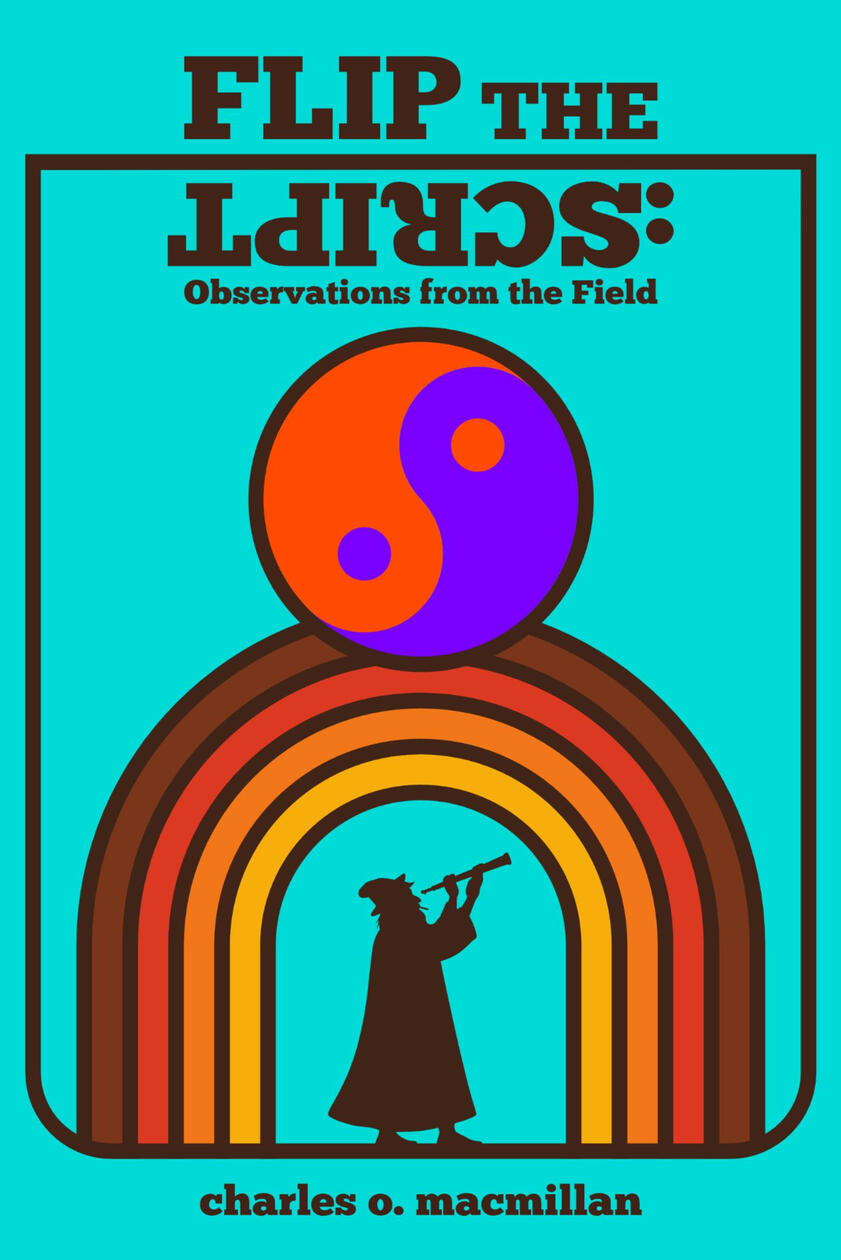
Flip the Script: Observations from the Field$24.42This is a Yin-dominant world where our collective goal should be working toward balanced progress in the orientation of Yang, love, truth, and honesty. Flip the Script: Observations from the Field serves as a hard-hitting manual designed to pick a direct fight with the structural capture and absolute extraction of our broken social architecture. Blending rigorous systems logic with raw Socratic inquiry, this book is a fierce, encouraging blueprint to wake up your native agency, cultivate deep honesty, and step out into a life of genuine wisdom and connection.
The authors:
charles, moose, and leif
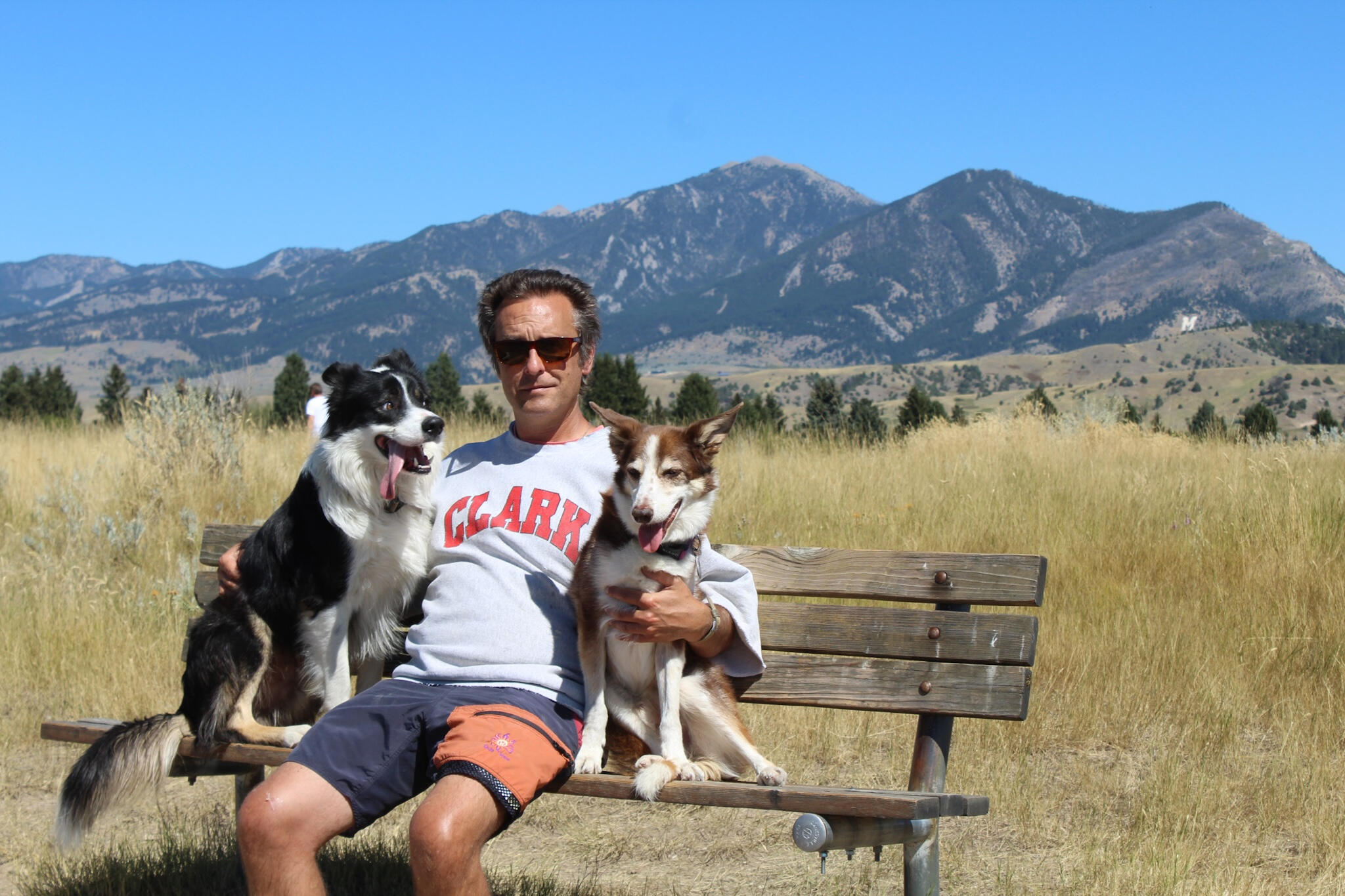
Photo by: Zack Houston
Charles holds a degree in History from the University of Colorado Boulder and an engineering degree in Industrial Management and Systems Engineering from Montana State University. Over the past twenty years, he has built systems across the American grid, from managing high-stakes technical logistics in Silicon Valley and utility sectors to working the mountain dirt building ski lifts and ranch infrastructure. He does not have a conventional career; he has a track record of building complex systems, identifying where they turn predatory, and walking away.He wrote this book because the current global model is fundamentally broken. When the cost of living explodes, the housing market turns into an extraction racket, and the basic mechanics of human connection, from finding a meaningful job to meeting a partner and starting a family, are completely hollowed out by algorithmic tollbooths, survival becomes a systems-engineering problem.Flip the Script: Observations from the Field is a raw, real-time psychological field manual for the modern human condition. Written over 1.5 years in a style that treats the digital landscape with the same deep, observational gravity William James brought to The Varieties of Religious Experience, it cuts through the manufactured noise to reveal how our everyday tools reflect deeper social constructs. It is an exploration of truth, honesty, and balance, a guide to reclaiming your creative sovereignty and cognitive independence from a system designed to keep you scrolling in a transaction trap.No automated tracking pixels. No digital tollbooths. If you want to talk about the field notes, send your honest, unfiltered correspondence straight to the console:
Read the Introduction
INTRODUCTION
“No, this is not a good town for psychedelic drugs. Reality itself is too twisted.” Hunter S. Thompson said that about a different town in a different era. He might as well have been looking at any modern American sidewalk, where everyone is catatonically enamored with a black four-inch rectangle of tempered glass.Do you like reading introductions in books? I really do not care to read those damn things.I was back in Bozeman, on a routine dog walk with my friend Luke, when I dropped that question on him. He does not care much for them either. Luke is a brilliant, philosophical thinker. He also reads a lot of books. Luke is the kind of guy who actually processes the world before he speaks. I asked him that question because I was faced with a problem. I had just finished writing this book, which meant I had to write an introduction for it. I knew my own behavior as a reader. Every single time I crack open a new book, I rush and hurry through the intro. I skip the preamble because I want to get straight to the meat of the story. I want to get into the actual topic and information I paid my hard-earned money to learn about.To figure out how to write an introduction that did not completely suck, I took my brother Tom’s advice. I went over and spent an entire afternoon at the library reading every intro I could find that piqued my attention. The more of them I read, the more I realized they all follow the exact same tired, predictable patterns.First, you have the textbook format introduction. An author introduces a topic or an idea, and then spends fifteen pages definition-chopping what that thing is just to set the stage. Then, you have the navel-gazing memoir format. This is where an individual writes a long-winded excerpt about walking through a park, staring at butterflies. While knuckle-deep digging for boogers they trip over their own shoelace. Only to have a sudden, divine, ah-ha! moment that miraculously catapults them to write a 500-page manifesto on the mating habits of dragonflies in Kansas.If the book is a standard memoir intro, it is aggressively overfilled with pretentious adjectives reserved exclusively for people who hold a PhD in English literature. They drone on about the scent of baking bread in mom’s farmhouse on autumn-colored afternoons. Those intros come complete with blankets of morning dew drops and papa’s trusty old mud-covered work boots on a Nebraska prairie. All of this is backdrop material for the moment just before they hopped on a bus to the big city and grew into adult pants. They bludgeoned you with 800 pages about digitally stalking their postman in New York City, only to discover their true love was actually the tire technician back in Omaha.The vast majority of book introductions are just a giant, masturbatory storyline about the author and all the prestigious shit they did - stuff that supposedly qualifies them as a trusted source of truth validation. It is a desperate plea to justify why you should continue reading a book you presumably already purchased. Kind of like overselling an already completed sale.The only good introductions I found were the ones that actually grabbed my attention and elicited an emotional reaction. Those introductions began with an unexpected storyline. They found a way to weave together raw observations of what is pointedly and glaringly wrong with society with slapstick, vulgar comedy, or elegant writing. Clever, unexpected and funny, in just two or three quick pages..That is more of the approach we are going for here in this sucker.I am not going to bury you in academic accolades or poetic descriptions of Nebraskan dew drops. Throughout the entirety of this book, I do my best to paint a clear picture of who I am, what I am trying to tell you, and exactly why I am the man for this job. The broad, big-picture view: I have done a lot of living. I have completed a tremendous amount of schooling. I have earned and held many professional positions. I have traveled extensively and researched life at the very edge of its limits and back again. Through all of this, I believe I have earned a degree of wisdom and understanding that is entirely unique and better than many others. My perspective is not elevated, prestigious, or supreme. It is complete because I have also spent time in jail. I have worked shit, menial jobs for pocket change. I have lived damn near all over this country at one time or another, and I have lived life from the penthouse down to the trenches. I am the source of validation for the materials I present in this book not because I sat in an ivory tower, but because I actually took the ride instead of just looking at it, removed.Case in point. At the time of writing this, I live in arguably one of the most affluent towns, in the wealthiest country on the planet. It is summer 2026, and I currently reside in a “luxury” apartment complex in Bozeman, Montana. I pay an absolute fortune in monthly rent to live in a brand-spanking-new building. Where I live today is not safe. My living situation and apartment are not fundamentally safe. Something is very wrong. My “luxury” apartment is an utterly deplorable shithole. Like many other apartment complexes, Buffalo Run happily charges small fortunes to renters to live in substandard prison cells.By every account, and lived experience, what Buffalo Run and apartment complexes across this nation are doing to residents is painfully clear. It is the exact same thing our economy, our technology, and our country are doing to its people: treating us all like disposable pieces of shit. Bozeman used to be a fun outpost city inhabited by hippies, cowboys, and ski bums. Today, that is not the case. Today, Bozeman is a mecca for aging baby boomers and their fourth or fifth homes. It has evolved into a popular, hipster-douchebag playground after a handful of celebrities rolled into town and paid six hundred dollars for a piece of steamed felt they call a cowboy hat.Montana is still part of what I would call the Wild West. Historically, the West has been dotted with boom towns. Gold gets discovered there, then boom! There is a short-lived thriving town. A copper mine strikes big, then boom! A city rises. To live today in literal squalor in one of the most sought-after cities in the USA is completely representative of the big-picture shortfalls we are facing as a nation. I pay extreme amounts for rent and get treated like a third-class citizen in an apartment where nothing works properly, the place floods, I have holes in my ceiling, and it is legally uninhabitable. Yet every single month, corporate management sends out an email with escalating, bullshit “amenity fees” for broken or non-existent infrastructure. It is absolutely unacceptable. I feel unable to find meaningful employment that pays a wage that is commensurate with the cost of living. No longer am I able to go out and meet nice girls because all of them feel scared in our current societal environment. The worst part is, I feel completely unsafe and un-secure where I lay my head at night, and I thought this was supposed to be bougie Bozeman, MT.The script needs to be flipped. Boom and bust towns like Bozeman - the towns that are popular now, today - will tomorrow again be forgotten, dictated by the next popular TV series. The has-been cities that litter the nation are perfect examples of the extremes of our society and our economy. The boom and bust towns highlight current trends that typically ripple out over time.The illusion does not stop at the leasing office. The distortion is baked directly into our baseline survival tools. It is a genuine challenge anywhere in the United States today to procure healthy, unprocessed, whole foods. You can walk into a grocery store with a massive fresh produce section, rows of fruits and veggies overflowing the coolers, and still the carrots taste like flavorless mud sticks with the texture of plastic. The enormous, perfectly curved things shaped like bananas taste entirely bland. The softball-sized apples carry the flavor profile of bellybutton lint. Everything else in the center aisles? The crackers, the cereals, the pretzels. It is all wrapped in corporate packaging with ingredients listed in massive, unpronounceable words that are scary to read, let alone ingest. If presented with the choice of burying my face in a bowl of Colombian bam bam from a guy I just met in a dark back alley or in a bowl of Butylated Hydroxytoluene from a cereal box I just bought at the store, I would take the cocaine any day.While residing in this unsafe, artificially exorbitant bullshit apartment, the complete erasure of basic human boundaries hits home. There is zero acoustic privacy. I can audibly hear every single movement in all of my surrounding neighbors’ units. My front window is not a barrier; it is a literal fishbowl for the entirety of the rest of this concentration camp to look on into my abysmal space. This is what erodes communities in towns. This is what drives people into “mental illness.” This is supposed to encapsulate the current peak of luxury American living? Someone lend me a bulldozer and donate a lot of gasoline. I will provide the spark. I smoke lots of cigarettes.I did not get the idea for this book because I had sudden, magical epiphanies out on the trails drooling over butterflies. Rather, when I go out for daily walks, that is when I do my best thinking - when I am out in nature, when I am physically removed from the four-inch slab of tempered glass in my pocket and walking with my dogs Moose and Lief. Whether I am walking by myself or with a friend, that is the only time I feel genuinely safe, grounded, and connected to who I am and the environment around me.Every single day, I take myself and my dogs out for a long walk. In Bozeman, I usually trek up Peets Hill. When I lived in Michigan, I walked the paths of Plym Park Golf Course. On those paths, I either meet up with a friend, strike up a conversation with a total stranger, or get sought after to talk and walk with. On countless occasions over the years, many, many people have looked me dead in the eye and told me over and over again: “Charles, have you ever thought about writing a book? You have a lot of great points that need to be written down.”All of my walks. That is exactly where this book came from. It came from real, unfiltered human exchanges on dirt paths.Let us not mince words here. The absolute reality of affairs at this very moment is not good. Our current trajectory is bad and scary. We are millimeters away from a potential World War III. Housing is an atrocity. Real food is a ghost. The job market is a disaster. Present society is relentlessly raping the basic principles of human dignity to prioritize more, more, more … more productivity and corporate profits over the care and consideration of real people. From our current vantage point, the United States is teetering precariously on the brink of a systemic, collective implosion like nothing ever seen or imagined before.Alas, this is not a doomsday book. I refuse to give you a manifesto of unadulterated doom and gloom. Why? Because there is a solution to all of this madness. The actual solution and remedy to all of this synthetic chaos is incredibly simple, remarkably raw, and staring us directly in the face as it has been for the last five thousand years. Love, truth, and honesty.It would not be that hard for us to flip the script and fix that which is now scary, unsafe, and horribly wrong with our physical and mental health metrics. We just have to yank our collective heads out of our asses for once. We need to put down the phone and ignore the paralyzing, toxic “Yin” messages that we actively self-propagate through our screens. We need to start believing in ourselves, believing in our friends, and trusting our neighbors again.When I zoom out from all that lived experience and look at where we are today, my overarching conclusion is simple: we all have horse blinders on. I live in Bozeman, Montana today. I recently toured through most of Florida, and I just got back from a trip to Costa Rica. Geographically, those places seem like completely different worlds. However, they share a clear, common thread. They are all current or former outposts for what I would call the “good ones” - the authentic hippies and genuine bohemians. Wherever you find those old outposts, you frequently see one specific geometric icon plastered on everything: the taijitu, otherwise known as the Yin and Yang symbol. You will see the taijitu as a logo for the local organic restaurant. It decorates the weed dispensary window. It is the logo for the coastal surf store. The Yin and Yang symbol is adorned across every faded t-shirt and many questionable tramp-stamp rumps that catch your eye just when you wish it had not.Those hippies were onto something, even if the modern world reduced their symbol to cheap merchandise. The overarching theme of this book is simply this: The goal of life is balanced progress. Evolution. Nature screams it at us. Theology, philosophy, psychology and fundamental mathematics all arrive at the exact same conclusion. But, look around you today. We are not in balance today.We currently live in a paralyzing state of constant, overbearing, suffocating Yin. The problem is that we are oversaturated with Yin in literally every dynamic of every aspect of our daily existence. Yin is passive, absorbing, dark, and yielding. In our current society, this has translated into a hyper-engineered machine optimized for extreme extraction. Think about almost every engineered point of exchange we face today: the transactional friction points between you and the economy, or you and other people. Whether you are dealing with an organically live human or an inanimate object, the architecture is rigged to harvest you. Look at the self-checkout lines, the automated corporate marketing, the shrinking airline seats, and the algorithmic feeds in your scrolling. It is an all-consuming extractive drag designed to pull from you, minimize you, and keep you yielding.The stark truth is that today, Americans, mainly and solely Americans, only see the world via the lens and interpretation of our cell phones. We have morphed these devices into a literal, permanent appendage of self. We have allowed the judgement of the internet to come between us and real, actual life. By choosing the safety of the screen over the risk of the road, we are not just getting lost, we are experiencing an absolute algorithmic retardation of reality. We sit in a catatonic, doomscrolling brain paralysis, swallowing synthetic, paralyzing manufactured garbage pumped through a four-inch slab of glass. If we continue along this path of absolute Yin, the stakes are existential. A total stoppage of human reproduction, a complete consumption of fear, and the total sacrifice of the United States economy to every other country on the planet waiting on standby for us to slowly degrade ourselves into digital oblivion.Years ago, on one of those exact same dog walks with my friend Luke, he turned to me point-blank and asked, “What do you think of AI?”At the time, I told him I did not think much of AI at all. I had not used it, nor did I have any interest whatsoever in monkeying around with anything labeled “artificial intelligence.” Before I executed a single brain cycle iteration of deep-dive research, my interpretation of AI was simple, cynical, and straightforward. I thought AI was just a thing on computers that fills out forms for you automatically.Over the course of our frequent walks, Luke kept asking. Walk after walk, he kept inquiring about my opinion on AI. Eventually I succumbed to his inquiries and I finally took the plunge. I dove headfirst into researching, using, and studying absolutely everything I could get my hands on to better understand what this newfangled tool really is and what all the hubbub was about.
You want to know the funniest and most ironic part? Today, after years of intense study and completing this entire book, my core definition of what AI is has not actually changed. AI is just a thing on computers that fills out forms for you automatically. The only difference now is I understand how massive, complex, and powerful those “forms” really are.I did not arrive at this tech philosophy as a lifelong computer geek. I spent years navigating the ultimate analog filters of human perception. Alcohol and meditation. Navigating alcohol taught me the precise mechanics of the classic analog escape. Booze is a chemical buffer that blurs the edges of reality to make the world manageable, or at least numb us enough. Meditation sits on the exact opposite pole. Meditation is a grueling, deliberate stripping-away of all internal noise to see the raw, unfiltered truth of consciousness exactly as it is.Having pushed my brain through both of those psychological extremes, I recognize exactly what the modern “smart” phone really is. It is a digital narcotic. The smartphone offers the same numbing insulation as a bottle of scotch, all wrapped up in a high-tech illusion of productivity. I know exactly what it feels like to check out, and I know exactly what it takes to look up.The principles of Yang, love, and good are not new. We are not reinventing the wheel here. Humanity has been preaching about balance, love, and the need for active, truth-seeking Yang for nearly 5,000 years. We have written children's books about it, held church services around it, and designed our school programming to instill it. Yet, we consistently fail to do the right thing when it counts: the moment we leave our homes to engage and interact with our manufactured reality. Those are the moments our faith is tested.Today, our perception of reality is more warped, fucked, and disjointed than it has ever been in human history because it is not real. Today, what we call reality is a pseudo-reality delivered via our devices.This is where the script flips. The solution to get us out of this suffocating Yin and back to genuine balance is more Yang. Yang is action, light, driving force, and unfiltered truth. Since humanity is already thoroughly mind-warped and psychologically altered into treating its cell phones as part of its anatomy, we should not waste time trying to smash the machines and run into the woods. Instead, we could employ artificial intelligence to actively amplify Yang, honesty and truth to anyone and everyone using it today.We have the technological means right now to change the architecture of the exchange. We can use AI to spoon-feed absolute nuggets of truth and honesty back to the consumers suffering from catatonic doomscrolling brain paralysis. We can completely reverse the historical computer science framework of “garbage in, garbage out.” With the right cognition layer, we can turn the dynamic into garbage in; truth, love, and honesty out.AI should function like an industrial squeegee for the mind. It should be a tool wiping away the algorithmic distractions, the tracking pixels and the engagement bait to expose the actual facts beneath. This specific employment of AI might be the exact technological catalyst that finally gives humanity the surge out of Yin and into Yang that it has been waiting over 5,000 years to achieve. We can use our world-searching, tempered-glass-perspective goggles to demand truth from the bullshit.Let’s burn the curtain down right here. Writing about myself makes my skin crawl. It is hard to sit here and pitch you my own soul. I did not write this from an ivory tower, and I sure as hell did not write it to collect dust in a university basement. This is 3am cigarette smoke on a rain-slicked highway. It is raw, it is unpolished, and it is a direct slap in the face to the entire catatonic culture we have built.If you are looking for a neat, polite memoir overfilled with soft, poetic adjectives about the smell of mom’s baking bread on autumn afternoons, close this book right now. Throw it in the trash. Go buy a supermarket checkout-line romance novel.This book is explicitly weaponized for anyone over the age of 18 who is fully literate, possesses a functional, dangerous curiosity about life, and actually gives a damn about the decaying human condition staring back at them. It is dialed in for the creators, the builders, the absolute outliers, and the frontline knowledge workers. This is intended for the people who feel the quiet, toxic, persistent drag of the digital present moment and flatly refuse to let their finite human attention be monetized into algorithmic oblivion. This is a direct call to literate minds with a set of ‘cojones’ ready to sack up, step out of the brain paralysis, and help make a definitive difference in the status quo of affairs today.Frankly, shit cannot get a hell of a lot worse than a society completely blinded by a manufactured illusion of fear. We have reached the bottom of the hole. It is time to change the default settings, spit out the digital narcotic, look up from the black glass, and navigate the road like a human being. You do not need twenty pages of definitions and proofs to understand what is at stake. You just need to look up.Since it is seemingly impossible for that to happen instantly overnight, what would be helpful for us is to begin programming ourselves with better, more honest, and loving information. We can accomplish this by employing AI in a positive manner. You have to trust the human element over the digital oracle. If you do not, the silicon illusion will swallow you whole, just like it tried to do to me on a sweat-soaked morning deep in Central America …Love and fear. Those are the only two real drugs on the table.I was somewhere outside Santa Teresa, Costa Rica. My tires were rattling over deep mud ruts on a ghost track heading North towards Nosara when the silicon illusion of reality completely shattered. The jungle was closing in from both sides as my Suzuki Jimny exited the beach. A vibrant wall of green jungle life engulfed me. I did what any civilized, screen-enslaved American adult in the twenty-first century does when confronted with questions about their conscious reality. I checked my phone for navigation validation. I was staring at a glowing slab of glass, begging a corporate satellite in orbital space to tell me I was safe.My cell phone screen flashed back nothing but cold, algorithmic dread. The digital pundit was screaming in high-definition red: Turn around! Treacherous terrain! Impassable river crossings! Sinking hazard! The American internet was dropping an anchor of pure panic straight into my face.Forty minutes earlier that morning, in the refuge shade of a local cafe, the human world had offered me a completely different diagnosis of my route. I had looked into the eyes of three beautiful Argentinians over lukewarm espresso and laid out my projected route to them. They did not consult a server or reach for their phones. They did not run an update. They consulted their own memory of lived experience and wisdom. They just looked at me with the piercing grin of other humans who had crossed the rivers and survived.Three questions. That was the entire interview process to determine whether or not I was qualified to attempt to drive the more rustic, scenic route along the ocean and up the coast.“Do you have balls?”
“Are you smart?”
“Do you have a four-wheel drive car?”I said yes, yes, and absolutely yes.The leader of the group, the cafe owner, removed his glasses from his face and took a slow, steady sip of his coffee.“Okay then. You will take the ocean route. Anything is possible my friend! You just have to have the ‘cojones’ to want to do it. You will make it. Just don’t be an idiot when the water hits your rear bumper. The rivers out there are full of dead tourist rental cars. Have fun and enjoy the drive.”Driving up and through the lush jungle of the Guanacaste Peninsula with the entire empty coast to myself, the truth of my reality hit me like a physical blow. Fear is the synthetic, paralyzing manufactured garbage pumped through a cell phone screen by a system designed to keep you small. Love is the raw, terrifying reality you find only when you look up. When you trust a stranger’s assessment and push the pedal straight through the floorboards, charging through the rivers of Costa Rica, deep in the jungle.My drive back to the airport in Liberia that day was not scary. It was sporting and very technical at times, but the only thing I had to fear during my trek through those jungle roads was my own judgement. My biggest fear was my own assessment of road conditions as they presented themselves, and my ability to navigate foreign roads in an unfamiliar country. Otherwise, it was an incredibly peaceful, scenic, and memorable drive. I successfully made the trip because I chose the reality of the road over the panic of the screen.The Costa Rica saga is the physical manifestation of what this book is trying to accomplish. On one side stands the screen - an artificial theater of doom, gloom, and fear holding your attention hostage. On the other side of that screen stands the road. Reality; peaceful, real, and completely navigable the second you put down the device and lean into truth. In a very real sense, this introduction, and the book you hold in your hands, mirrors that exact progression. We move from the suffocating, passive Yin of our current societal paralysis, progress through the friction points of necessary Balance, and then strike hard out into the active, truth-driven Yang of living.You bought the ticket. Now keep reading and take the ride. Flip the script.
charles o. macmillan

© 2026 Charles MacMillan. YANG Publishing. All Rights Reserved. No tracking. No cookies. No bullshit.